
DIHS Contributes to International Dialogue on Cyber Resilience at the Euro-Atlantic Resilience Forum 2025
13. Nov 2025
On 6 November 2025, the Digital Innovation Hub Slovenia (DIHS), in cooperation with the Euro-Atlantic Centre for Resilience (E-ARC, Romania), co-organised and participated in a panel discussion within the framework of the Euro-Atlantic Resilience Forum 2025, titled “Anchoring Cyber Resilience in a Unified Digital Europe: The Bucharest–Ljubljana Dialogue.”
The event was organised as a duplex panel, taking place simultaneously in Bucharest and Ljubljana and connected via videoconference. This format symbolically and practically underscored the importance of cross-border cooperation in addressing cybersecurity challenges.
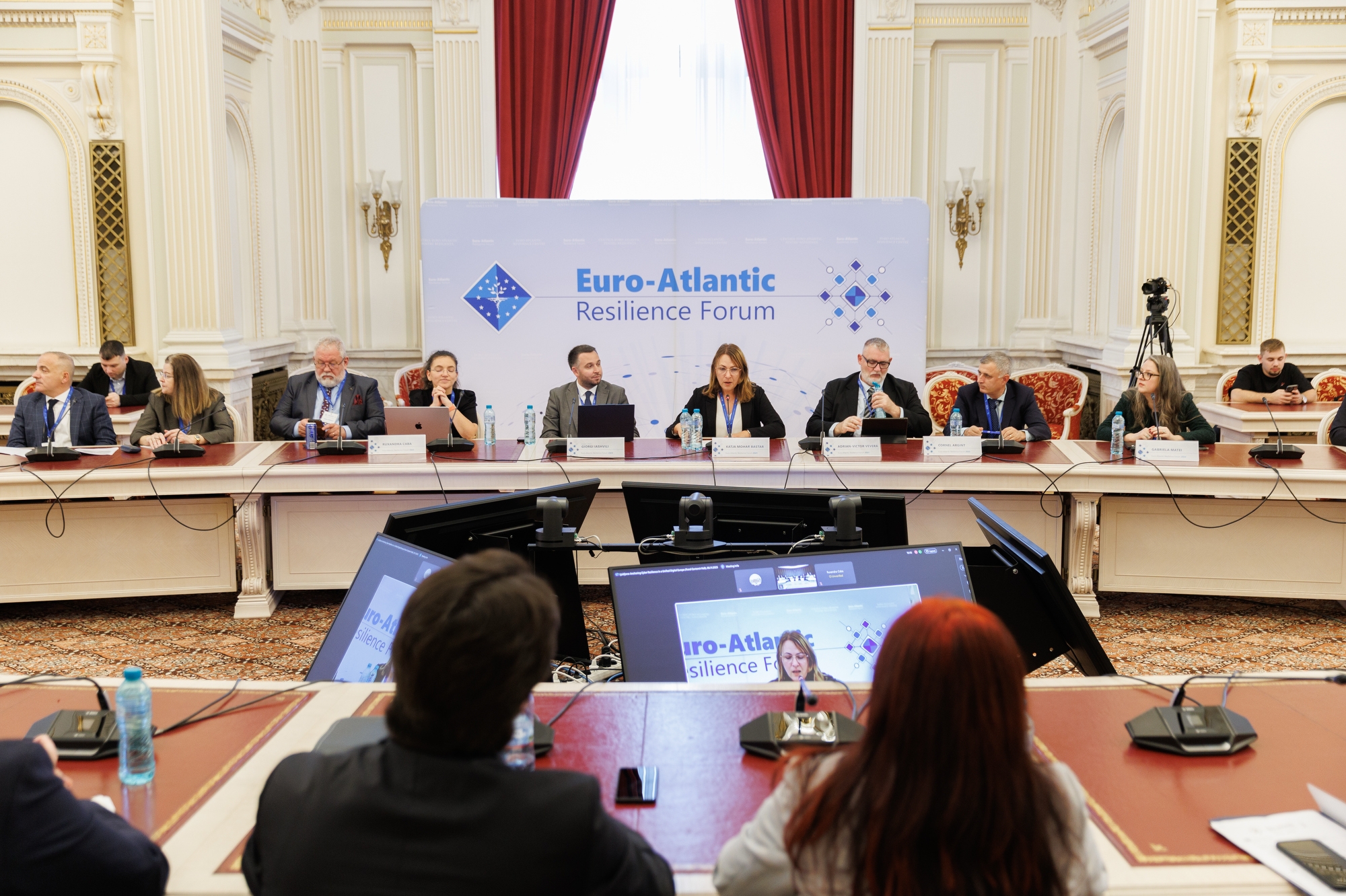
The Bucharest segment brought together representatives from ministries, embassies, national cybersecurity authorities, NATO-related institutions, chambers of commerce, and industry stakeholders. The Slovenian Ambassador to Romania was also among the participants.
The panel in Bucharest was moderated by Katja Mohar Bastar, Director of DIHS, highlighting Slovenia’s active role in shaping international dialogue on cyber resilience.
In Ljubljana, DIHS hosted the Romanian Ambassador to Slovenia, the Greek Ambassador to Slovenia, representatives of the University of Ljubljana, the Chamber of Commerce and Industry of Slovenia, as well as selected cybersecurity experts. The Ljubljana session followed a more focused, invitation-based format, enabling in-depth expert discussion.
The panel discussion addressed:
-
the implementation of European legislation (NIS2, DORA, and the upcoming Cyber Resilience Act),
-
challenges in translating regulatory frameworks into practice,
-
the shortage of cybersecurity and compliance professionals,
-
the role of innovation ecosystems and Digital Innovation Hubs,
-
the need for stronger European coordination in building cyber resilience.
A shared conclusion emerged: while the legislative framework is increasingly robust, effective implementation, workforce development, and structured public–private cooperation remain critical.
Within the session “Practical Pathways to Cyber Resilience,” the CRACoWi project was presented by Michael Baine from Bureau Veritas, a project partner.
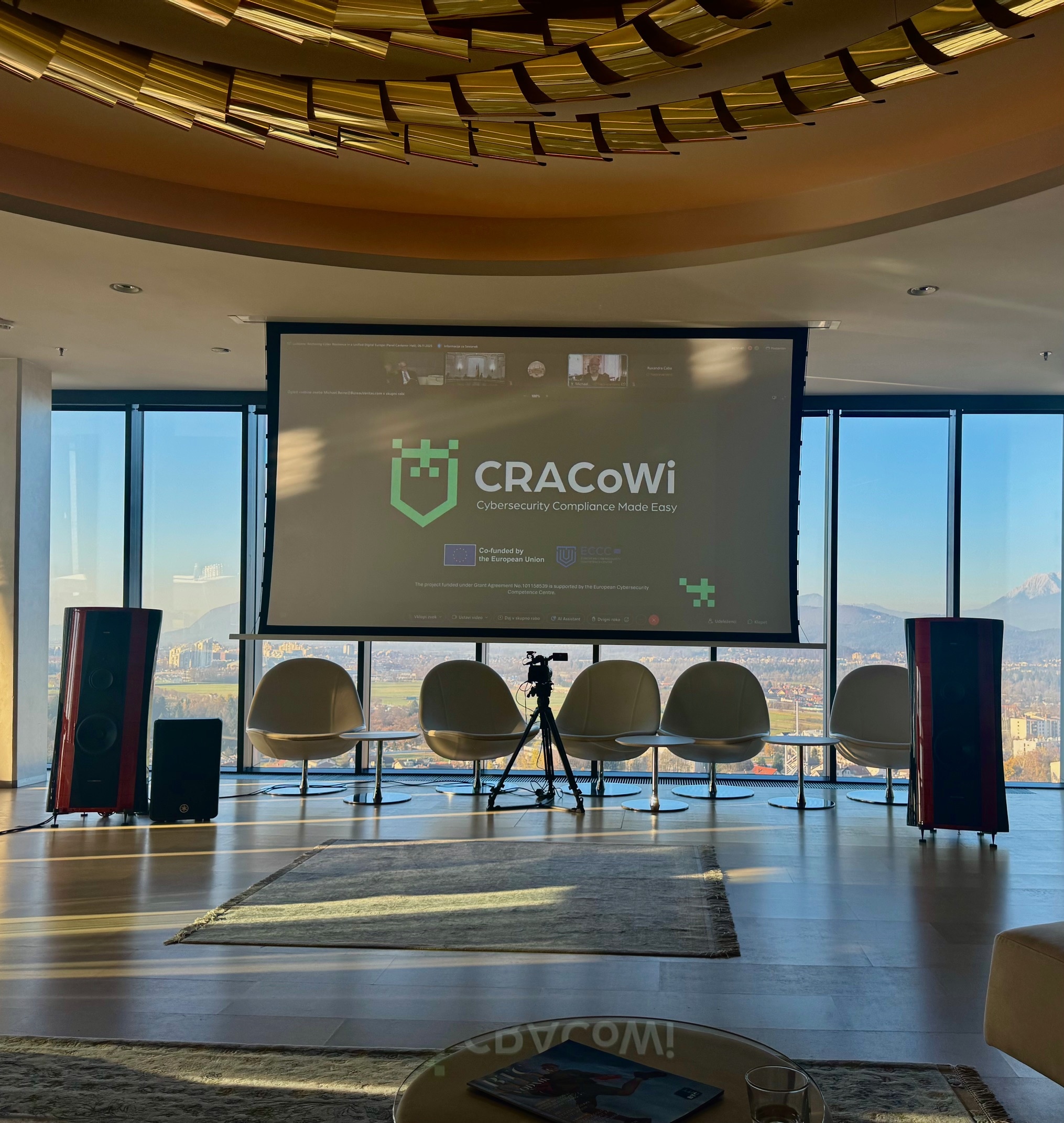
The presentation highlighted:
-
the importance of cyber resilience in supply chains,
-
practical approaches to preparing for the Cyber Resilience Act,
-
the need for harmonised standards and support tools for organisations.
During the presentation in Bucharest, participants demonstrated strong engagement—many were actively taking notes and attentively following the discussion, particularly regarding the regulatory implications and practical compliance pathways. This reflected the high relevance of the topic and the growing demand for structured, actionable cybersecurity solutions.
The Euro-Atlantic Resilience Forum 2025 reaffirmed that cyber resilience is a global challenge requiring coordinated, cross-border responses. The duplex dialogue between Bucharest and Ljubljana clearly demonstrated that cooperation among governments, academia, industry, and innovation ecosystems is essential for strengthening Europe’s digital security.
Through its role in moderating, organising, and presenting project-based solutions, DIHS continues to actively contribute to building a safer and more resilient European digital space.